
This interview was from our article about the Ascari KZ1-R GT3, the first ever carbon fiber
GT3 production where you can read it at;
https://enduvision.com/ascari-kz1-r-gt3-the-carbon-pioneer/
Entering into the interview, dear reader, for put yourself into context, we were reaching him,
about the Ascari KZ1-R GT3, so the main talk about about that, except during the interview
we could ask him thanks to his history with other GT’s a different type of questions related to
motorsport, here we let the keys, enjoy!
Part I Luca Pirri’s Racing Career
Section 1 | Luca Pirri History
When did you start racing, and how did you make the transition from
single-seaters to GTs?
Luca’s answer:
I won my first race in ’93 in the formula series at Bisanzio. I come from a formula racing
background.
I started racing GTs in 2000, then again in 2004–2005—I think I raced the Saleen in 2005, or
maybe 2004—and in 2005 I raced the MC12 and the Ferrari 360, that GT2 model.
I finished second in Bahrain alongside Drudi Sr. He and I both finished second in Bahrain.
You’ve driven a lot of different cars. What makes and models have you
raced?
Luca’s answer:
I raced the Corvette, I raced the Saleen, I raced the MC, I’m the only one who’s raced both
the MC12 and the MC20 and I raced Porsches; I raced the Ferrari 360, 430, and 458, and
that’s where I stopped.
And he adds:
Lamborghini…
Section 2 | His first contact with Ascari KZ1-R GT3
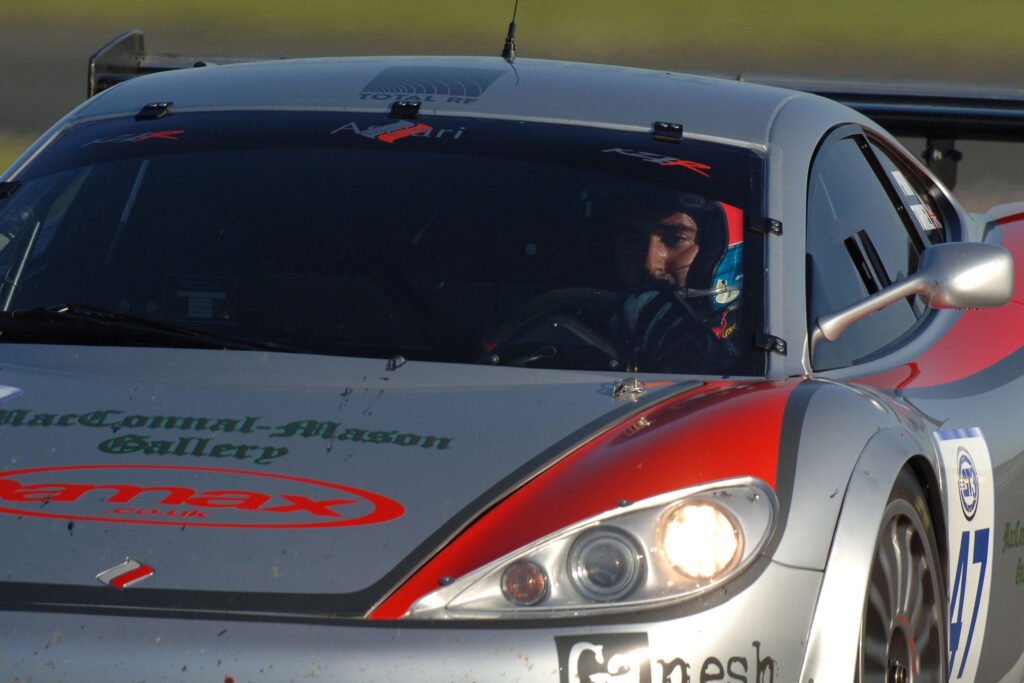
How did you end up racing the Ascari KZ1-R GT3?
Luca’s answer:
I saw the car and wrote to the team. The team owner was Zwart, a billionaire who had made
his fortune in oil. I was going to Snetterton… they were testing there, and I did well, so they
offered me the chance to start, let’s say, racing.
What caught your attention most about the Ascari when you first saw it?
Luca’s answer:
It was a beautiful car because the chassis was made of carbon fiber, so it was super rigid the
only carbon-fiber chassis of its time for luxury cars.
It was a real speed demon.
Section 3 | What was it really like to drive it?
What was the Ascari KZ1-R GT3 like to drive?
Luca’s answer:
The crazy thing was the handling—it was incredibly fast. It was super responsive. You’d
barely turn the wheel sharply, and you’d already be into the corner…
It was raining at Silverstone, and the car proved to be incredibly fast there, too. And
incredibly fast for a car from a manufacturer that didn’t have the resources that others did.
Section 4 | The first races
What do you remember about your first races with the Ascari?
Luca’s answer:
In the photos I took of the race at Snetterton, unfortunately my teammate wasn’t very good,
so we didn’t make it to the podium.
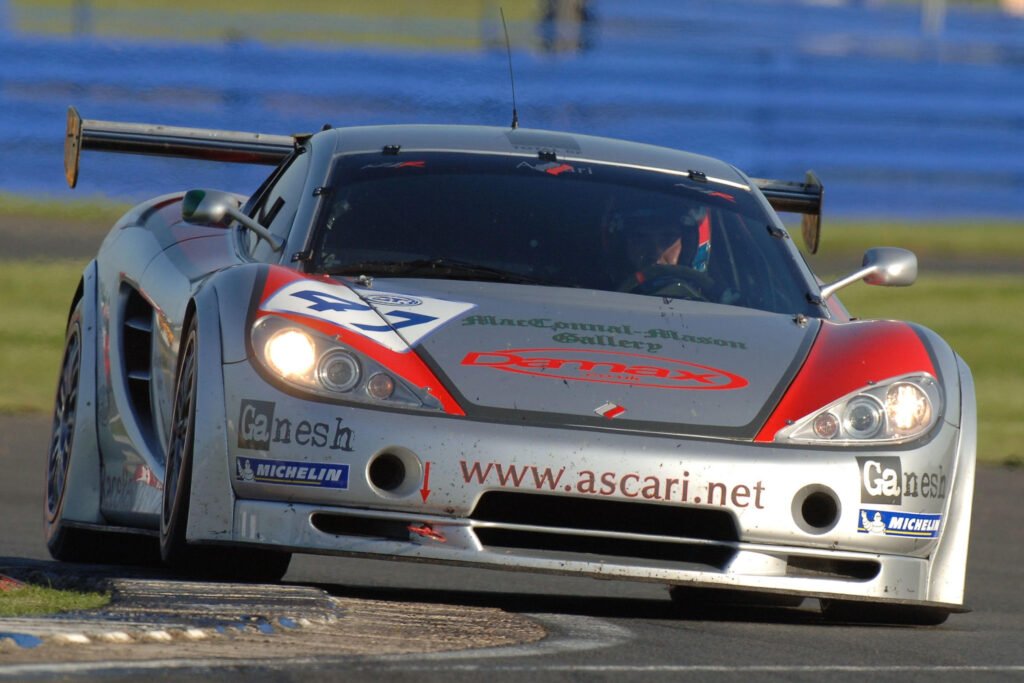
And in the second race, I think I started third or fourth overall. However, he spun out and got
pushed into the center of the track, which caused the carbon fiber to break. There’s a photo
of the car spinning out, and unfortunately, we weren’t able to continue the season after that.
What happened after the accident, and why weren’t you able to continue the
season?
Luca’s answer:
Then the team ended up caught between two misfortunes, and they ended up racing in a
somewhat random way.
They’d tried to get things together, then did a little bit of… well, everything was very, how
should I put it, very sporadic, so to speak. So, in short, it was a bit of a shame from my point
of view, because it was a great machine.
Part II – The Project had potential…
Section 5 | Lost Potential
How competitive do you think the Ascari KZ1-R GT3 could have been with
proper testing and development?
Luca’s answer:
With no testing, no development, nothing. I’ll say it again: my teammate wasn’t very good, so
we wouldn’t have been as strong as we could have been at its launch.
He disappeared, and all the test data has been lost since a date that’s way too far back and
this is to say that the car had even greater potential and was therefore absolutely, absolutely
top-notch.
Section 6 | Ben Collins
What do you remember about Ben Collins and racing the Ascari with him?
Luca’s answer:
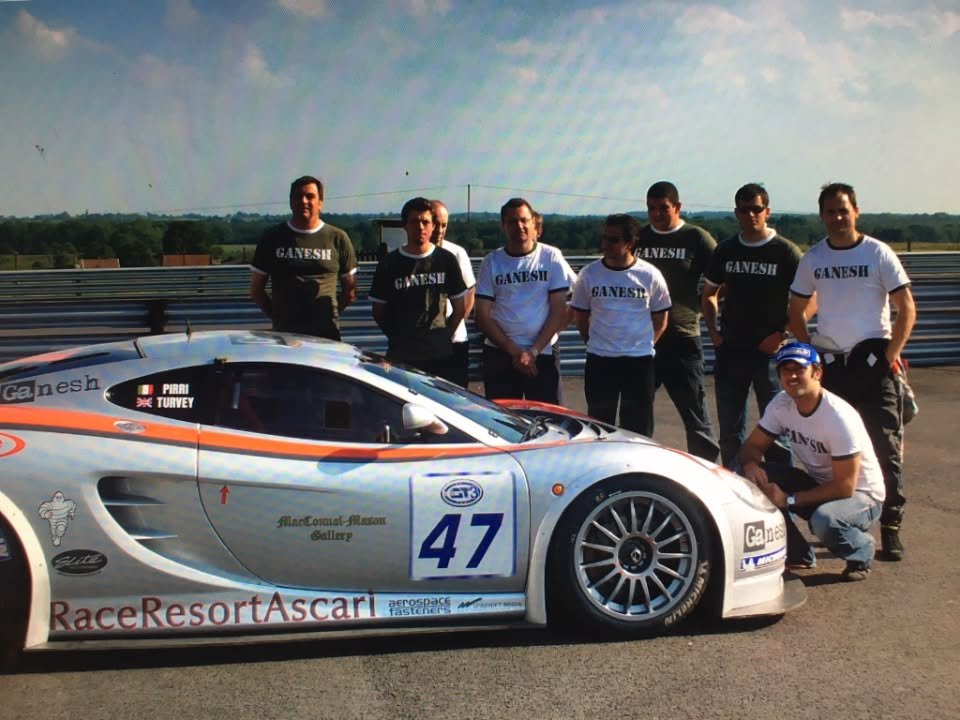
We used to race the Ascari; my other teammate was Ben Collins.
Ben Collins was the Stig back then, just so we’re clear, so he was definitely a character who
at that time, had, how should I put it, a little bit of…
And then he tells the story:
I suggested to him—when we still couldn’t say anything about it, because he obviously
couldn’t say anything yet—that we do an episode with the classic Italian Stig, with the gold
chain, all in red, hair flying, which was a fun thing to do.
Section 7 | Ascari vs other GT3
What were the biggest differences between the Ascari and the Corvette
GT3?
Luca’s answer:
From my perspective—as, let’s say, a veteran of GT3 racing—I believe that the most
important quality for a GT3 car isn’t so much its weight or the engine’s position, but rather
the engine’s torque.
In other words, the torque the engine is capable of delivering—which obviously allows you to
extend your line coming out of a turn and, to put it simply, gain time on your opponents.
The Corvette had a gearbox—I think it was an Xtrac—and manual front tires, not
Adacca—sorry—which was terrible. However, it had an exceptional engine, an optimal
setup, and optimal weight distribution.
It was a car that, if you drove it well and didn’t overdo it, would still give you great results.
And regarding the Ascari:
The Ascari, on the other hand, was a bit of a handful; you had to throw it into the corners,
drive very aggressively, and it was definitely more challenging to handle.
From your experience what makes a car truly good in GT3?
Luca’s answer:
The most important quality for a GT3 car isn’t so much its weight, nor is it the engine’s
position—it’s the engine’s torque.
In other words, it’s the torque the car is capable of generating, which obviously allows you to
extend your line coming out of a turn and gain time on your opponents.
And he gives this example:
The most striking example is the outstanding results Mercedes has achieved over the years.
Part III | Luca beyond the Ascari
After the Ascari project, you went on to race the Ford GT GT3. What do you
remember about that car and that experience?
Luca’s answer:
I raced the Ford GT40 GT3 the following year. I was the only Italian to win with the Ford
GT40. It was the first project, and then later they developed the GT1, which raced at Le
Mans in 2010.
What have you learned from endurance racing about building the right
driver lineup?
Luca’s answer:
Well, in endurance racing, the secret is the package.
The strength of the teams. When they come to me, my job is mainly to try to find the right
mix—which doesn’t always mean the fastest drivers, but rather the two who are the most
reliable
Section 8 | Ascari with perspective
Looking back, how do you remember the Ascari project?
Luca’s answer:
Truly a beautiful gem.
It was a super machine.
It’s a bit of a shame from my point of view because it was a super machine with that
sequential gearbox and the engine
[…]
If someone asked me today which car I’d want to use for the GT3 revival, I’d want to do it
with the Ascari, and in my opinion, it would be competitive.
Conclusion,
Before we close this interview, we would like to thank Luca once more for taking the time to
speak with us and for sharing his memories and experiences with EnduVision.
His perspective offers something that technical data and race results alone can never
capture: a genuine sense of what the Ascari KZ1-R GT3 was actually like from behind the
wheel.
Without doubt a car could have so much potential, but didn’t end up on the right way.
Thank you very much for your time to read the article!
Here we let some others articles; Enjoy them!


Leave a Reply