

When people talk about racing at the Nürburgring, the first things that usually come to mind are the N LS or the 24 Hours of Nürburgring. Yet there’s another series that has been part of motorsport on Germany’s legendary circuit for decades: the Rundstrecken Challenge Nürburgring, better known simply as the RCN.
The RCN is a touring-car and GT competition run on the Nürburgring Nordschleife. What sets it apart is not only the venue but the format itself.
Unlike a conventional championship built solely around wheel-to-wheel racing, the RCN mixes performance and regularity elements. Drivers have to complete certain laps at a set target time while pushing as hard as possible on the timed sprint laps. Strategy, precision and consistency therefore play a much bigger role than in a pure race.
The series is organized by the Rundstrecken Challenge Nürburgring association and features a wide spread of cars and classes everything from lightly prepared small touring cars right up to powerful GT.
The RCN also occupies its own niche in the Nürburgring racing scene, sharing the same track with series such as the Nürburgring Langstrecken-Serie (NLS).
But how does an RCN event actually work? What classes are there? How is the result decided, and why does regularity matter so much?
What does an RCN event actually look like?
This kind of races are way different, here are the key’s:
The event kicks off with a reference lap. The driver sets a time that then becomes the target for the following confirmation laps. Let’s say they cover the Nordschleife in 9 minutes 30 seconds.
From that point the driver has to switch between different types of laps. On the confirmation laps the job is to match that target time as closely as possible. A 9:30.100 is almost perfect; a 9:40, on the other hand, brings a penalty.
But the whole thing is not just about rolling around at a steady pace. There are also pure sprint laps where the only goal is outright speed. Here the driver is free to attack the Nordschleife and chase the fastest time he can manage.
So a typical sequence might look something like this:
reference lap → confirmation lap → sprint laps → another confirmation lap → more sprint laps…
And through all of it the driver still has to deal with the usual race-day realities: traffic, overtaking, cars from completely different classes, tyre wear, fuel load and of course, more than 20 kilometres of the Nordschleife.
At the end of the day the winner is not necessarily the driver who set the absolute fastest lap. The final result balances the penalties collected on the confirmation laps against the times achieved on the sprint laps.
That combination is exactly what makes the RCN different: pure speed is not enough. You also have to know when to push and when to be precise.
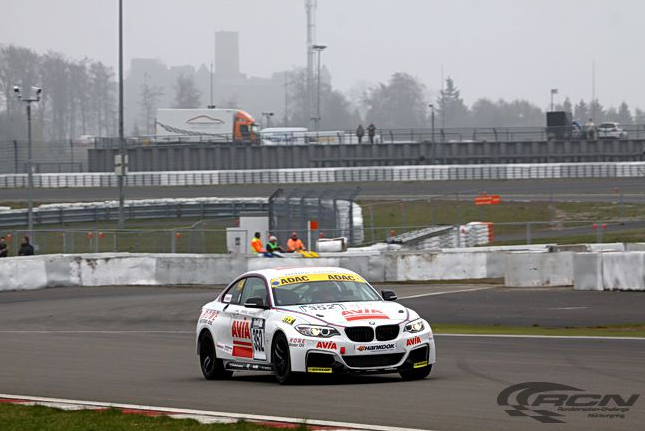
The cars of the RCN
One of the things that makes the RCN stand out is the sheer variety of machinery that ends up sharing the same track. There is no single model or power bracket required to take part. Instead the cars are split into different groups and classes according to their technical specifications.
In the 2026 season the main categories look roughly like this:
| Group | Classes | Approximate capacity |
|---|---|---|
| RCN-Produktionswagen | R1–R6 | Up to 3,500 cc |
| RCN-Produktionswagen turbo | R1A–R3A | Up to 3,000 cc |
| RCN-Spezial | RS1–RS8 | Up to 6,250 cc |
| RCN-Spezial turbo | RS2A–RS8A | Up to 4,000 cc |
| RCN-Spezial Diesel turbo | RS1 DA–RS3 DA | Up to 3,000 cc |
| Group H | H1–H7 | From under 1,400 cc to over 3,500 cc |
| RCN Light | 28–30 | Up to and beyond 2,000 cc |
These classes are not decided by power alone. Engine capacity, the type of engine (naturally aspirated, turbo or diesel) and, in some groups, the power-to-weight ratio all play a part in determining where a car ends up.
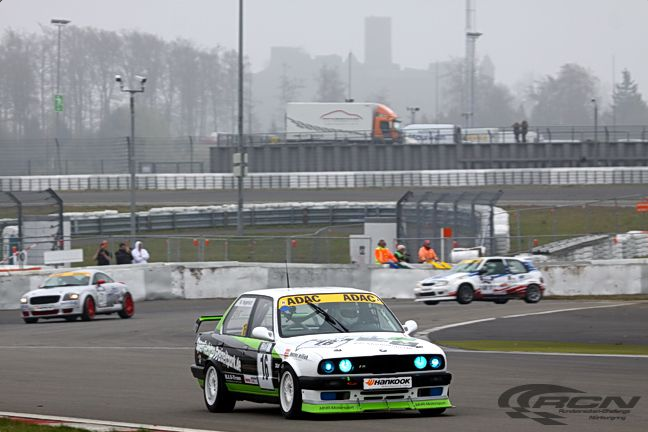
That system allows completely different cars to run in the same event. A BMW E36 318is can share the track with far more powerful machinery, yet each competitor is primarily fighting inside its own class.
I want to race in the RCN — what do I need?
After looking at the cars and how an RCN event actually works, the next question is the obvious one: what does it take to compete?
First comes the driver. For the 2026 season you need a valid competition licence issued by the DMSB (Deutscher Motor Sport Bund) or by another FIA-affiliated national authority.
You must also be at least 18 years old.
One useful detail: the regular RCN Leistungsprüfung (the one we explained before) does not require a DMSB Permit Nordschleife (DPN). That changes for the separate Schwedenkreuz a 3H race at the end of the season, where a DPN is mandator, for get the DPN, you must complete 2 RCN Leistungsprüfung races.
With the licence sorted, the next step is finding a car and entering an event. You can bring your own race-prepared car or take a seat with a team that supplies both the car and support.
The RCN publishes registration details, technical regulations and event documents through its official participant portal. Every round has its own entry process, technical inspection and document check before the start.
For first-timers the organisers also run a new-driver briefing before the event. It is especially helpful if you are still getting used to the RCN format and the procedures that apply at the Nürburgring.
Can I race my own car?
Yes but you cannot simply turn up at the Nürburgring with a road car. The vehicle has to meet the technical and safety regulations laid down by the RCN and the DMSB, and it must fit cleanly into one of the groups and classes.
Once the car is properly prepared it still has to pass the technical scrutineering, and the driver needs the correct licences and paperwork.
In short, the RCN covers the full spectrum: from privateers who prepare and maintain their own cars right through to teams that supply a complete package for racing on the Nordschleife.
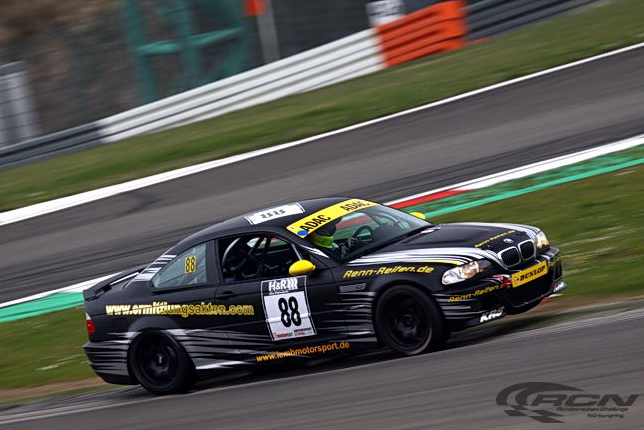
But why RCN Exist?
We know it might sound a bit strange at first. The RCN is another championship competing at the Nürburgring, so why have another one when we already have competitions such as the Nürburgring 24 Hours and the NLS?
But the RCN is not trying to compete with them. Instead, it offers a different way of racing, with a format that emphasis on consistency, precision and performance.
The series is particularly attractive to amateur and privateer drivers, as it provides a more accessible way to compete at the Nürburgring. This combination of relatively accessible competition, a wide variety of cars and the unique RCN format gives the series its own place in the Nürburgring racing scene.
Got the urge to race in the RCN after reading about it?
You don’t need your own race car or a full team. Teams regularly put driver seats up for grabs — both for experienced drivers and people just starting out in the series.
One of the places where these offers show up is MotorsportMarkt.de. You’ll find everything from single race entries to full arrive-and-drive packages.
Looking for an RCN seat?
Check the current RCN driver seats on https://www.motorsportmarkt.de/fahrerplaetze
Just make sure you’ve got the right licence, experience and gear for the event before you contact any team
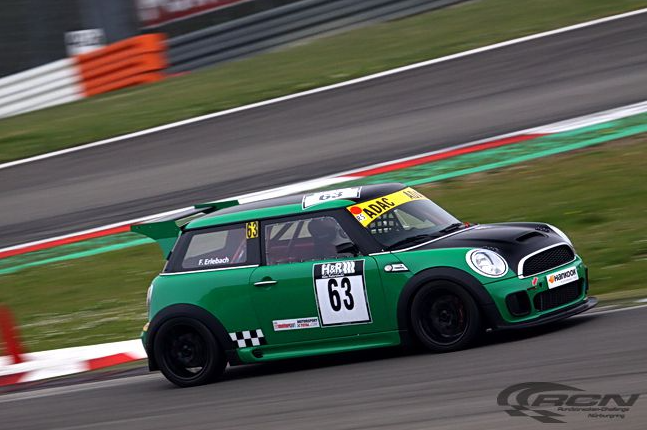
*All images are from: gallery.r-c-n.com
If you liked our article please have time to leave a comment or read more articles! Have a nice day!
- Six Hours, One Winner: Toyota Conquers Barcelona
- GT Open Barcelona: Who Will Win the 2026 Title?
- BMW 318ti Cup: Who Will Win the Championship?
- 24H BARCELONA 2026
- 24H SERIES European Series: The Season That Went Down to the Wire
Webgraphy
https://www.r-c-n.com/teilnehmerinfos
https://www.dmsb.de/de/lizenzen/dmsb-permit-nordschleife
https://www.dmsb.de/de/automobilsport/rundstrecke/file/282181
Leave a Reply