

The 24 Hours of Barcelona had spent more than a decade developing its own niche in the Spanish motorsport scene.
Having originated in 1998 as a quite modest endurance touring car race, it had by the mid-2000s become one of the largest events held at the Circuit de Catalunya, bringing professional drivers, amateur competitors, foreign manufacturers and teams into the race.
But behind the race’s success lied fragile foundations.
And by 2010, it would disappear.
From a full grid to an uncertain future

The contrast between 2007 and 2009 editions says more about the situation than almost anything else.
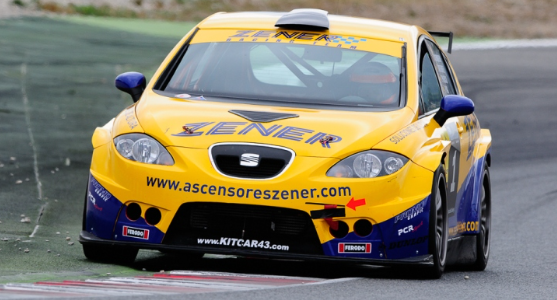
In 2007, the tenth edition of the race had 69 teams and more than 250 drivers participating in it. Its field was predominantly composed of SEAT León Supercopas, but still contained a notable amount of variety with such car models as Renault Clio, BMW, Mazda and many others. By then, the race had become very important for Spanish Motorsport calendar.
This edition was won by the Gevicar’s SEAT León Supercopa, driven by Albert Vilanova, Dani Vilanova and Cristian Cano. They managed to complete 616 laps of the Circuit de Catalunya.
Only two years later, the picture would look very different.
The 2009 edition was initially supposed to see around 30 teams taking part, with about 100 drivers. As in the previous edition, the field would be predominantly filled with SEAT León Supercopas and Renault Clio alongside some other car models.
But the actual field was incredible reduced in just 2 years!
As little as 28 teams took part in this edition.
The winner of this edition was the Sunred Seven’s SEAT León Supercopa driven by Borja Veiga, Ferrán Monje, Manuel Sáez-Merino Jr. and Òscar Nogués.
However, the problem with the race wasn’t the number of participants that was reduced in just 2 years, the race was becoming more and more difficult to maintain.
The crisis strikes
The timing of the situation could hardly be worse possible.
Starting in 2008, the global financial crisis affected Spain in a particularly harsh way, impacting teams, sponsors and private competitors involved in the motorsport.
For a race mostly focused on national teams and gentlemen drivers, it was a problem.
Taking part in a 24-hour race it’s really expensive, car, mechanics, entry fee, fuel tyres, logistics and much more.
By 2009, the organisers were already looking for ways to keep the event alive.
One of these measures was to open the race to teams with international licenses, in an attempt to compensate for the reduction of Spanish participation. But it wasn’t enough.
The last race
September 2009 marked the end of the first chapter of the 24 Hours of Barcelona.
The race remained true to the essence of endurance competition: a day and night on the track, driver changes, failures of mechanics and struggle against tiredness.
However, the numbers told a different story.
From 69 participating teams in 2007, the number of participants dropped to 28 in 2009.
By November 2009, the decision was basically made.
The 2010 edition was cancelled due to lack of entrants.
For the first time since its foundation in 1998, the city of Barcelona wouldn’t host its 24-hour automobile endurance race.
The Circuit de Montmeló was quiet for a year.
The race which could not have a future anymore? It seemed as if the story was going to finish right here.
The 24 Hours of Barcelona had gone from an endurance experiment in Catalonia to a national event, bearing the name of Fermí Vélez, having seen participation of hundreds of drivers and being a highlight of the Circuit de Catalunya calendar.
Now it had disappeared. But there was a difference in comparison to the previous disappearance of racing from Montjuïc. Barcelona already had the infrastructure.
Thankfully for Circuit of Catalunya, and for all fans of motorsport. In 2011, CREVENTIC, a Dutch promoter with a reputation of organising 24H Dubai, partnered with RACC and the Circuit to bring back the race.
But it would not be the same as before.
The 24 Hours of Barcelona was about to change drastically.
The SEATs would not dominate the front anymore.
International teams would join.
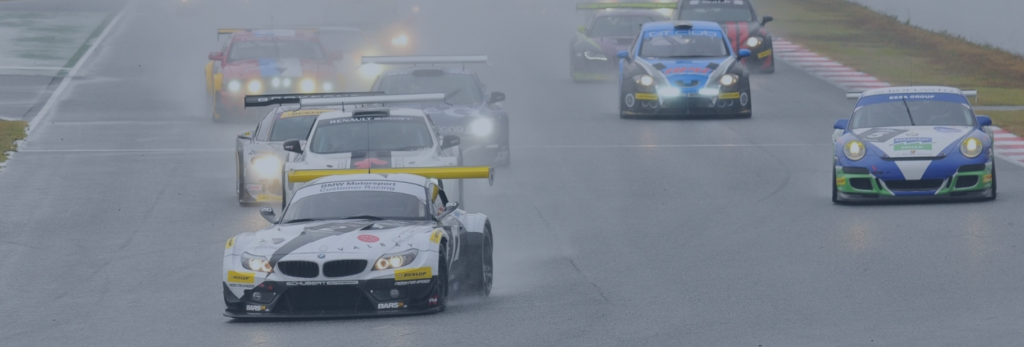
GT cars would be allowed.
And the race would become a part of something much more extensive.
The 24H SERIES.
The 24-hour race of Barcelona did not die. It just came to the end of its first incarnation.
If you liked our article, we let here Part I , II and III
https://www.24hseries.com/news/interview-2022-hankook-24h-barcelona
https://enduvision.com/history-of-the-24-hours-of-barcelona-from-montjuic-to-1998/
Leave a Reply