

We know that the term BoP (Balance of Performance) is present in almost every major motorsport category. As a result, after virtually every GT3, Hypercar, or other BoP-regulated race, social media fills with comments such as “they’ve ruined the BoP” or “that car only won because of the BoP.” But what does it actually mean?
Where Did the Balance of Performance Come From?
Birth of GT1
In the late 1990s, the GT1 category experienced one of the most iconic and spectacular eras in motorsport history.
The grid featured legendary machines such as the McLaren F1 GTR, Porsche 911 GT1, Mercedes-Benz CLK GTR, Toyota GT-One, and Nissan R390 GT1.
On paper, they were GT cars.
In reality, many of them were essentially racing prototypes that had been homologated for road use by producing only a handful of street-legal examples.
The philosophy was simple:
The more money you invested, the faster you became.
Manufacturers entered an almost unlimited technological arms race. New chassis, extreme aerodynamics, bespoke engines, and ever-growing budgets eventually made the category financially unsustainable for many teams.
GT1 had stopped being a normal racing category.
It was no longer a battle between drivers.
It had become a battle of budgets.
The New GT1 Sought to Avoid Repeating History
Several years later, the FIA attempted to revive the GT1 category under a completely different concept.
The cars had to be based much more closely on production road cars, and the homologation requirements became far more restrictive.
It’s worth remembering that during the original GT1 era, manufacturers only needed to produce a single road-going version of the car.
Regulations now imposed limits on areas such as:
- Dimensions
- Weight
- Power
- Aerodynamics
- Vehicle homologation
The objective was straightforward:
To prevent another technological escalation like the one that had occurred in the late 1990s.
However, one car soon appeared that would once again challenge the entire system.
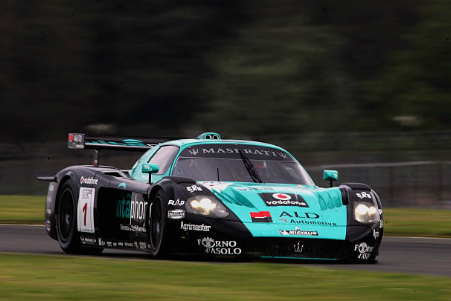
The Maserati MC12
In 2004, Maserati unveiled the MC12.
From the very beginning, it was designed with one goal in mind:
to win races.
Its exceptional length, outstanding aerodynamic efficiency, and technical foundations derived from the Ferrari Enzo made it an incredibly formidable competitor.
Even before making its racing debut, the FIA required Maserati to modify the car in order for it to be homologated it’s overall length had to be reduced from approximately 5,143 mm to 4,993 mm, alongside additional restrictions concerning weight and homologation.
But that was only the beginning.
As the MC12 continued to demonstrate its superiority on track, further restrictions were introduced in an attempt to reduce its competitive advantage.
Without Realising It, the BoP Was Being Born
At that time, nobody was talking about the Balance of Performance.
However, for the first time, motorsport authorities attempted to preserve competitive balance by adjusting the performance of a dominant car instead of banning it altogether.
It marked a significant shift in philosophy.
For decades, whenever one car became too dominant, the solution had been far more radical: ban the car entirely or rewrite the regulations from one season to the next, effectively removing it from competition.
Some well-known examples include:
- The restrictions imposed on the Audi V8 quattro in the DTM after its period of dominance.
- The regulation changes that eliminated the advantage of the Audi A4 quattro in the BTCC.
- The limitations placed on dominant Group A cars, most notably the Nissan Skyline GT-R R32.
With the MC12, a different approach began to emerge.
Instead of eliminating the car, its performance would be adjusted so that it could continue competing.
It was not yet the sophisticated Balance of Performance system we know today.
But it represented one of its earliest foundations.
Although it never completely equalised the category, it successfully prevented one manufacturer from achieving the overwhelming levels of dominance seen in previous eras.
The Great Revolution: The Birth of GT3
This is where the story takes a decisive turn.
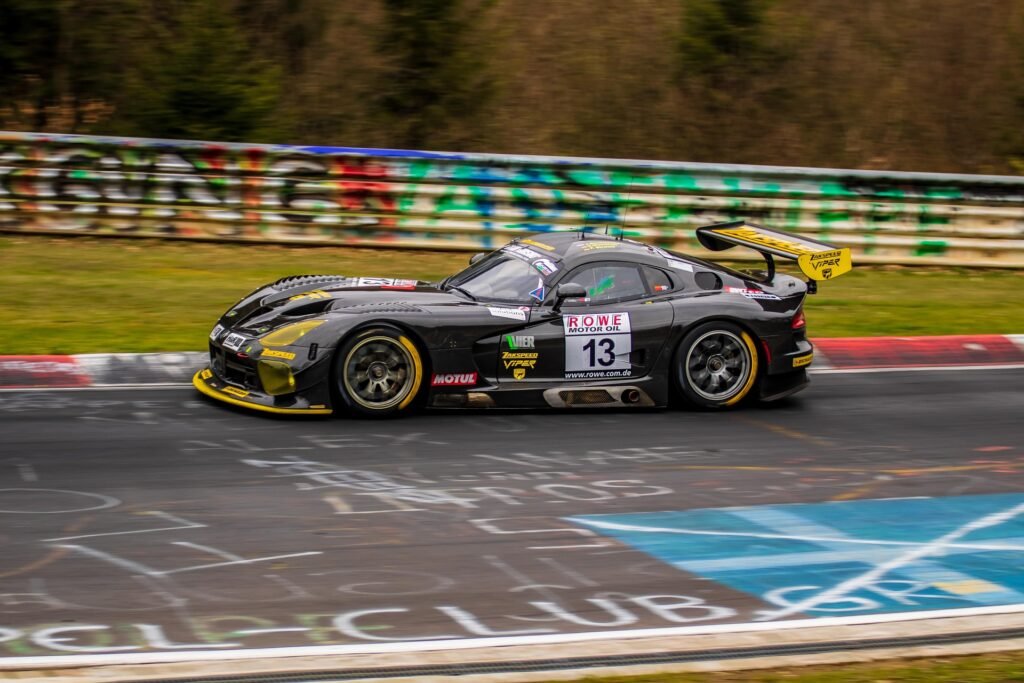
Just one year after the debut of the Maserati MC12, all of the lessons learned from GT1 inspired SRO Motorsports Group, the organisation behind the GT3 concept, to create an entirely new racing category.
GT3 was born with a revolutionary philosophy.
Instead of trying to regulate every technical detail, manufacturers would be given far greater engineering freedom.
The balance would come afterwards.
And that balance would become known as the Balance of Performance.
From that moment on, cars with completely different architectures could compete against one another, including:
- Front-engine cars
- Mid-engine cars
- Turbocharged engines
- Naturally aspirated engines
- Different engine capacities and engineering philosophies
The BoP would then adjust their performance to ensure they could compete on equal terms throughout the race weekend.
This new philosophy immediately attracted the attention of manufacturers and private teams alike.
At the very first GT3 race, held at Silverstone, as many as 44 cars took the start on British soil—a remarkable achievement and an immediate success for the new category.
The concept of the Balance of Performance proved especially appealing to private teams.
Rather than allowing victory to be determined simply by who had chosen the most competitive car, the BoP aimed to ensure that race results would depend far more on the performance of the team and the drivers.
Not simply on the badge displayed on the bonnet.
Today, the BoP Is Indispensable
More than twenty years later, the system continues to evolve.
By analysing telemetry, simulations, top speeds, acceleration data, sector times, and dozens of other performance indicators, the Balance of Performance allows manufacturers with completely different vehicle concepts to fight for overall victories.
One of the best examples can be found in today’s FIA World Endurance Championship (WEC), where the Hypercar category has flourished thanks largely to the implementation of the BoP.
That said, the system is far from perfect.
Sandbagging remains an issue, with some teams deliberately hiding their true pace in order to receive more favourable BoP adjustments.
And every new update inevitably sparks fresh controversy.
Nevertheless, one fact is difficult to dispute.
Without the Balance of Performance, it would be almost impossible to enjoy categories such as GT3, or today’s incredibly competitive Hypercar classes in both the WEC and IMSA.
More than a dozen manufacturers are now able to compete at the highest level, while private teams have genuine opportunities to challenge factory-backed operations for overall victories.
If you want to see more post we recommend you this ones:
https://enduvision.com/how-allard-tried-to-challenge-peugeot-and-jaguar/
https://www.gt-world-challenge-america.com/news/1381/chat-gt3-who-created-balance-of-performance
Nice!
Article, Still think that BoP decided about winner, Aston on test before Le Mans, were the fastest one, after le mans the slowest just behinf of a tractor peugeot
Sin duda el BoP ha salvado el automovilismo moderno, incluso la F1 tiene su especie de BoP con el ADUO