

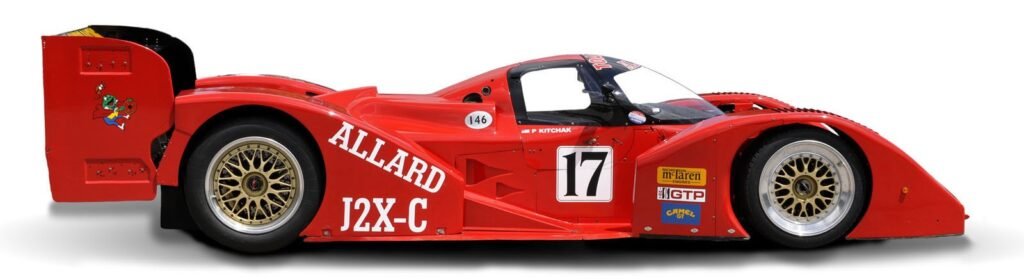
Chassis: carbon fiber single seater
Engine: ford-cosworth V8 90° from f1 cars
Around 600 hp, naturally aspirated 3.5L
Gearbox: sequential 6 gears from leyton house
Weight: 860kg
Suspensions: push rod both front and rear
Wheelbase: 2,85m
Had 2 versions, group C and street legal
THE ALLARD MOTOR COMPANY: born from a man with a crazy idea
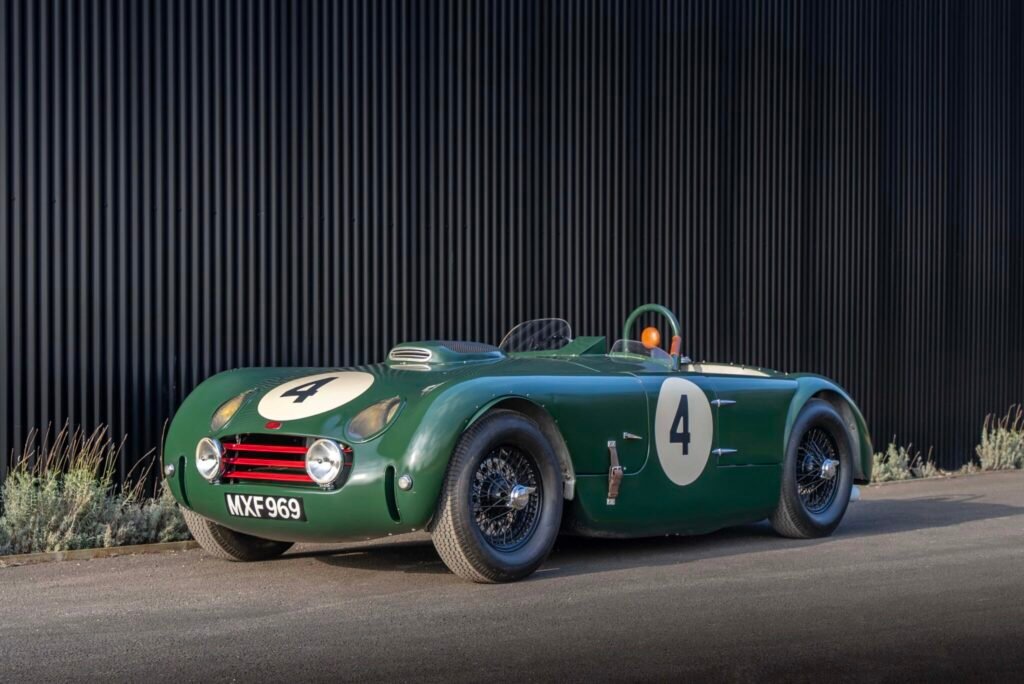
Allard J2, Le Mans 3rd place

Allard P1, Rallye MonteCarlo 1953 winner
The Allard Motor Company was founded by a young Sydney Allard (a rally driver at the time) just after WWII in 1945 near London the phylosophy of the brand was something never seen before.
His goal was to put an American, high power engine in a light British manufactured chassis.
The brand achieved great results right away in different categories of motorsport, such as a 3rd
place finish at the Le Mans of 1950 in the Allard J2
(fun fact, sir Allard drove the car himself with Tom Cole, and managed to get a podium despite suffering a gearbox failure 12 hours in, that caused the car to be stuck in 3rd gear for the remaining 12 hours!).
The Allard brand also won the famous Monte Carlo rallye in 1952 with the Allard P1.
This win still remains one of the few wins by a driver in his own car.
Eventually the company closed in 1958 due to financial complications.
In 1992, almost 40 years later the closing of the Allard project, designer Chris
Humberstone chose to try and revive the deceased brand of Allard (that he aquired from
the son of Sidney Allard, Alan) by creating a prototype for the notorius group C category.
The goal was to challenge the big names of endurance racing like Peugeot and Jaguar
with the new regulations of the group C class.
The team decided not to invest in the big names of Formula 1 and Endurance,
Humberstone instead hired new, fresh minds like the aerodynamicist John Iley (that will
be later remembered for his work in F1 for Ferrari in the years of the Ferrari dominance
with the F2004 and in other teams) and Hayden Burvill, an Australian designer who took
the lead of the project.
The Allard J2X-C
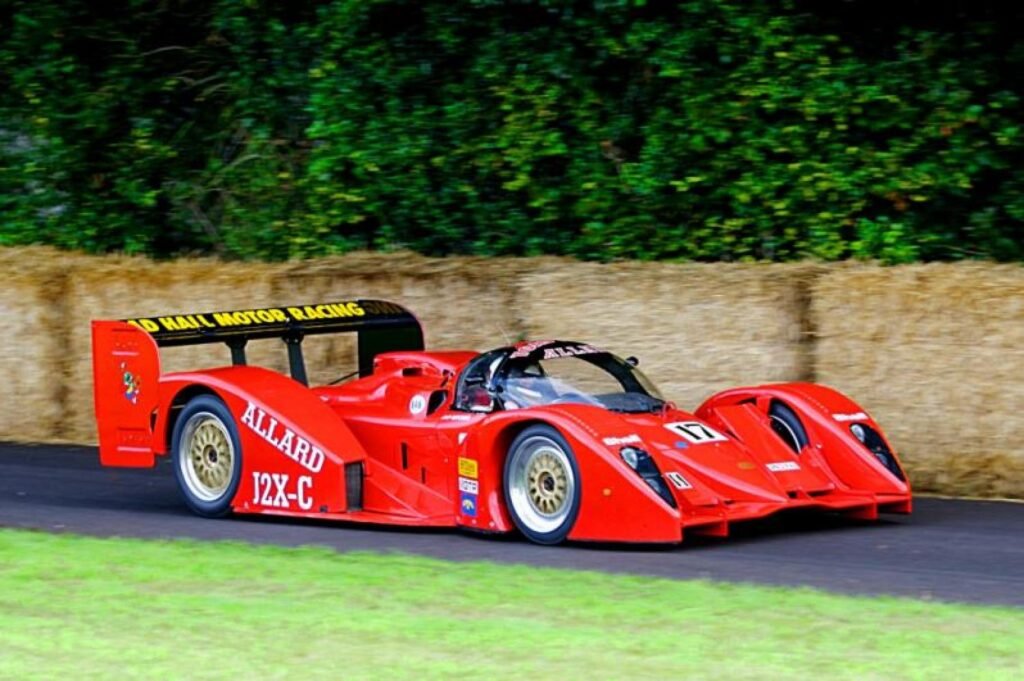
The Allard J2X-C at the Goodwood festival of speed
The group C cars of those years had a tendency to suffer of understeer due to the lack
of aereodynamic load, and this brought other problems like high tyre degradation and
lower cornering speeds.
So Burvill and Iley decided to put the aerodynamics of the car on top of the priority list and
try to fix this recurring problem that was taunting the other manufacturers.
This phylosophy resulted in an extremely small and slim chassis in order to reduce drag
and turbulence.
The front nose of the car was also peculiar from the competitors. It was
based on the F1 car Tyrrell 019: the tyres were separated from the chassis, with 2
massive flaps with an aggressive inclination right in front of the push rod suspension.
These flaps were able to generate enormous amounts of downforce, while also
redirecting the airflow towards the rear of the car and the rear wing.
The rear wing is just as extreme. The dimensions were out of the ordinary, helping not
only in the generation of downforce as a single element, but it also worked directly with
the rear diffuser (that, of course, was made as big as possible to increase rear
downforce)
Clearly, downforce was not a problem for this project.
In fact, the allard had the biggest aereodynamic load out of all the group C cars of that year.
We are talking about > 4000kg of downforce at around 300 km/h.
But we are at Le Mans…
But unfortunately, with big downforce comes big air resistance (or drag).
This means that while the car was a beast and unbeatable in corners, it was very slow on the
straights compared to it’s competitors.
And in a track like Le Mans, that was the main goal, it wasn’t looking good.
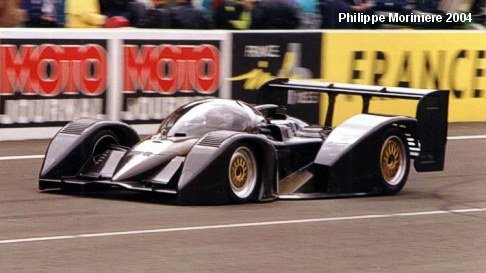
The J2X-C testing a lower downforce version at Le Mans tests, featuring smaller flaps on the front and a skinnier rear wing in order to try to fix the top speed deficit.
What went wrong?
Unfortunately, the car never saw the long straights of Le Mans.
The failure of the project came down to 4 reasons:
- Money
As a private team the Allard Holdings didn’t have the resources to compete against the
big names of endurance like Peugeot and Toyota. The high expenses required in this
type of projects were just not there in the first place. - Group C regulations scandal
Around the time of the J2X-C project, the FIA decided to make 3.5L, F1 based engines
mandatory in every group C car, this made the costs skyrocket and out of reach for
privateers. - High drag problems
As we said before, the Allard J2X-C had massive amounts of drag, this would have
required a complete overhaul of the project, that translated in more expensive redesigns
and development that the Allard Holdings couldn’t afford. - Underpowered engine
The Cosworth V8 that was chosen for the J2X-C was making around 580hp, while the
factory team’s engines were making 650-670hp. This power deficit + the massive drag
was a really bad combo for straights.
RACING HISTORY
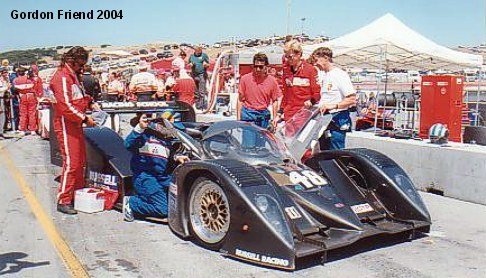
The only chassis of the Allard J2X-C at Laguna Seca
Only 1 chassis was built, and it competed in just one event in the IMSA series accross
the Pacific Ocean at Laguna Seca, finishing in 9th position, 17 laps behind the Toyota
Eagle #004 that won the race.
It’s a shame that we didn’t get to see the real potential of this car, it will remain as one of
the biggest “what if” of group C history
https://enduvision.com/why-gt3-is-the-most-established-category-in-modern-motorsport/