
In this new series of articles, we will dig up the history of the backmarkers in motorsport and try to understand what went wrong along the way. We will cover names like Vanwall, life F1, Isotta Fraschini and Minardi will all be covered by us during our journey.
For this first episode, we will discover how Vanwall managed to come back almost 60 years later from his closing back in the ‘60s
The Vanwall Vandervell 680 LMH spec sheet:

Weight: ~1030 kg (varies with BoP)
Engine: Gibson GK428 4.5L V8 aspirated with
670HP
Gearbox: Sequential 6-speed Xtrac
Wheelbase: 3100 mm
THE BRAND: VANWALL
Following a short chapter with BRM (that ended on bad terms due to some accusations against Thinwall bearings regarding the engine failures accross the 1950 season), a fed up Tony Vandervell funded the Vanwall brand in 1953 with the goal to utilize the bearings of his factory (Thinwall) and most importantly to beat “those bloody red cars” referring to Ferrari.
Vandervell wanted to beat Ferrari more than anything for 3 specific reasons:
- Vandervell bought 4 Ferraris before creating Vanwall: All of them were poorly built and had worn out parts: Tony wrote a mail on what to fix and how to Enzo Ferrari, who didn’t appreciate the criticism. The argument exploded between the two
- Thinwall bearings were used by Ferrari for their engines: those bearings were preventing the Italian engines from melting. Vandervell knew his products were one of the reason for Ferrari’s success but he didn’t receive any recognition.
- The Vanwall brand was made to achieve what BRM couldn’t: in his time at BRM, Tony felt wounded in his patriotism as an English man seeing the failure of the British teams getting beaten by the Italian brands. The goal of Vanwall was to beat Ferrari and bring England to the top.
The name “Vanwall” comes from the merging of his last name “VANdervell” with the name of the bearing business “thinWALL”
Vanwall made its debut in the 1954 F1 season, with the “Vanwall Special”. The first F1- homologated cars of 1954 and 1955 (VW55) suffered a lot of reliability problems, until Terry Vandervell hired the engineer Colin Chapman.
The work of Chapman showed right away with the VW56 in the 1956 season, with a first win for the team in Silverstone.
Despite it not being an official race for the drivers championship (it was an unofficial round, there were no points handed out), the win was an early sign of what was to come in the next few years.
Matter of fact, in 1958 (along with the first World Constructor Championship) Vanwall won the Constructor Championship with the help of Tony Brooks (3 wins), Stuart Lewis-Evans and Stirling Moss (also 3 wins), who lost the Drivers Championship on the last round by a single point against Mike Hawthorn in the Ferrari 246/256.
Despite winning the title, the 1958 season didn’t end on a high note. Unfortunately, in the last race of the season in Morocco, Stuart Lewis-Evans suffered an high speed crash; the impact was so harsh it caused his Vanwall VW5 to burst into flames. Stuart was airlifted to the nearest hospital through helicopter. The medical staff tried everything to save him, but unfortunately Lewis-Evans succumbed to his injuries 6 days later.
This tragedy struck a Tony Vandervell (who was already sick) personally to an extent that he took the hard decision to withdrew Vanwall from almost every racing duty from 1958 onwards.
As a result, in the following years (1959-1961) Vanwall made some brief appearances without earning any memorable results. The last race came in 1961, when the mid engine cars were taking over F1, leaving Vanwalls front engine layout in the dust.
The Vanwall brand slowly faded away after a few races in the intercontinental Formula with the VW14, the only mid-engine car created by the brand.
Tony realized that the brand had no reason to keep living, and ultimately took the decision to shut down the factory and the program for good, going back to making exclusively bearings under the Thinwall name.
THE REBIRTH: LE MANS PROJECT
Fast forward to early 2019, team Bykolles Racing (owned by Colis Kolles) began the development in the team’s infrastructures in Germany, the prototype was based on the new LMH regulations that were going to replace the P1 machines after 2020.
On the 18th of September 2020, on the weekend of Le Mans, a first static model, together with 2 other concept renders of other cars based from the same chassis, was shown to the public.
In 2021, the first drivers for the tests were announced (Argentinian driver Esteban Guerrieri and Frenchman Tom Dillmann)
Accord to the initial plan, the car was meant to debut in wec in the 2021 season, but due to the COVID pandemic and other factors, the first aereodynamic tests were postponed to late 2021.
Up until now, there was no mention of the Vanwall name, and thats because Vanwall had nothing to do with the early development of the car until 2022, when the name of the car and team was changed from “Bykolles” (that was linked with poor performances from the P1 era) to Vanwall.
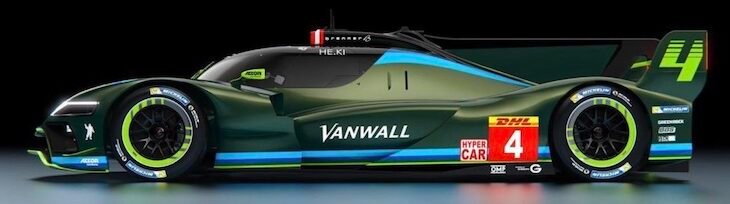
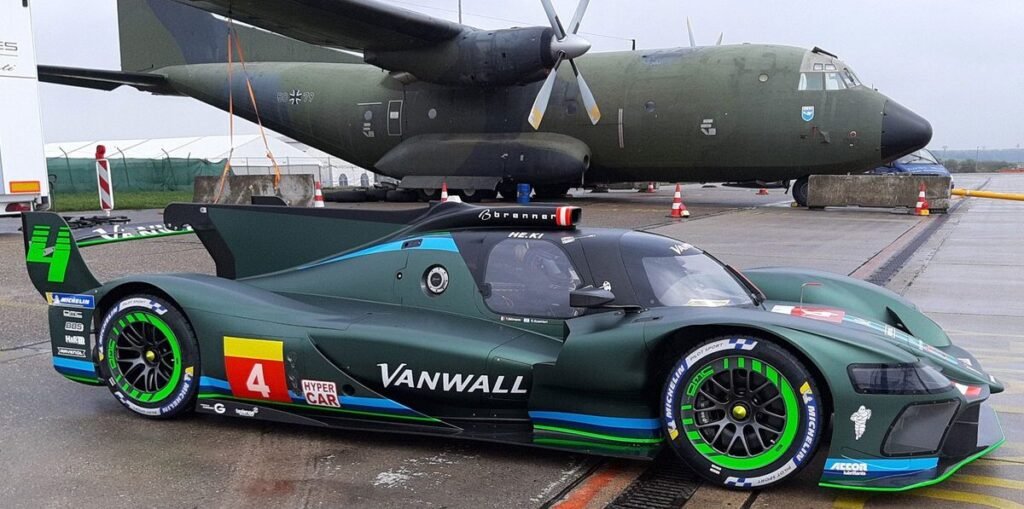
In the April of the same year, the car finally made it’s debut on “track”, in the airport of Zweibrücken in Germany, with Christophe Bouchut behind the wheel.
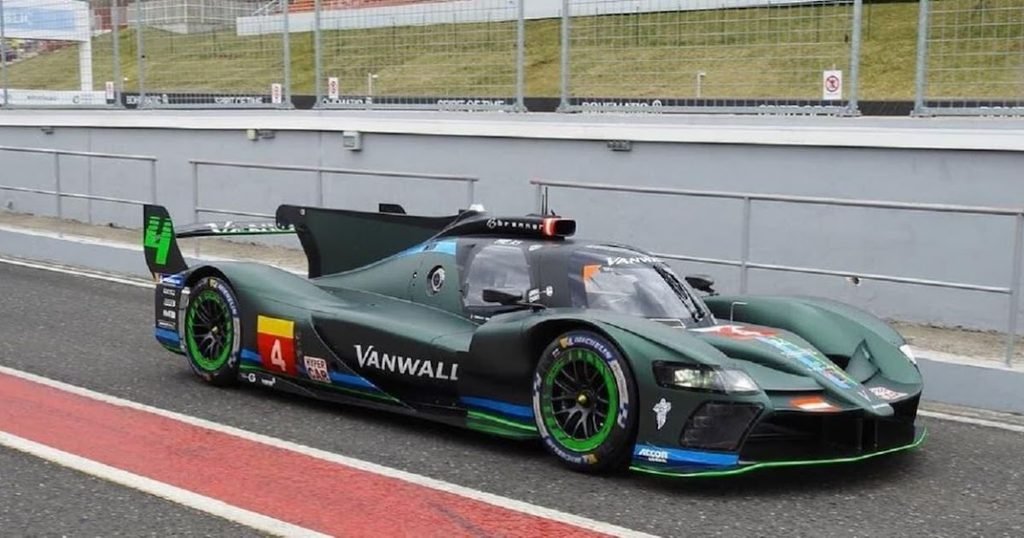
In the following months of 2022, the LMH car completed differents kind of tests (aereodynamical, mechanical, long runs, etc…) on the tracks of Mugello, Most, Monza and Paul Ricard. We have little to no information about how these tests proceeded.
THE DEBUT IN 2023
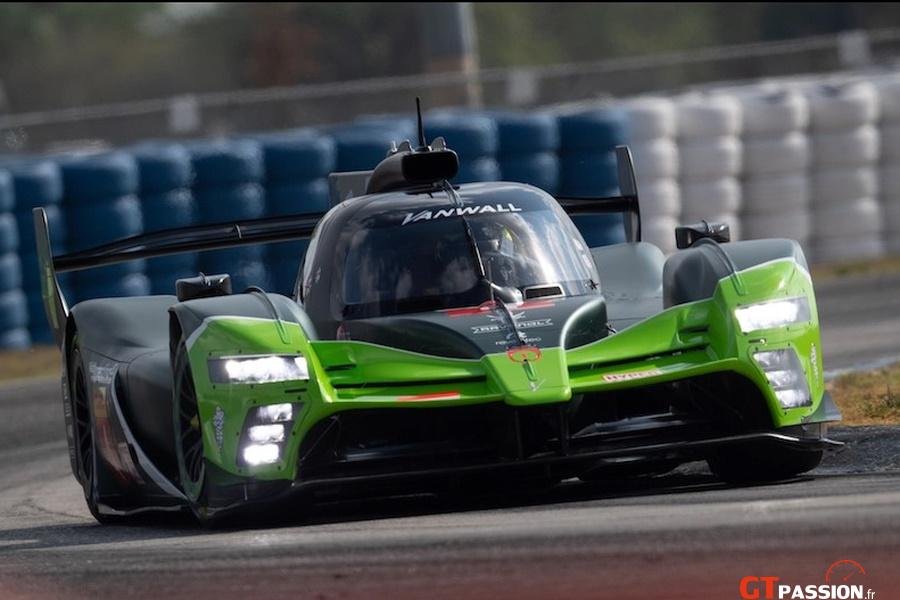
Team ByKolles was ready to hit the track under the Vanwall name by 2023, with the first round of the WEC 2023 season heading to Sebring for the 1000km of Sebring.
On it’s debut race with Tom Dillman, Esteban Guerrieri and F1 1997 World Champion Jacques Villeneuve behind the wheel, the Vanwall 680 managed to cross the finish line in P8 of the hypercar class without suffering any critical mechanical failure.
In the next round at the 6 hours Portimao, the team was positive to see what the car could achieve this time around. The car qualified in P11, and in the race the pace was far off the pace of the factory teams like Toyota and Porsche. Even worse, the car retired on lap 174 with just a bit more than an hour to go following a front-brake disk failure while Villeneuve was behind the wheel. The car spun before colliding with the outside barrier of T10. The car suffered some structural damage to the chassis, that had to be fixed before the 6h of Spa.
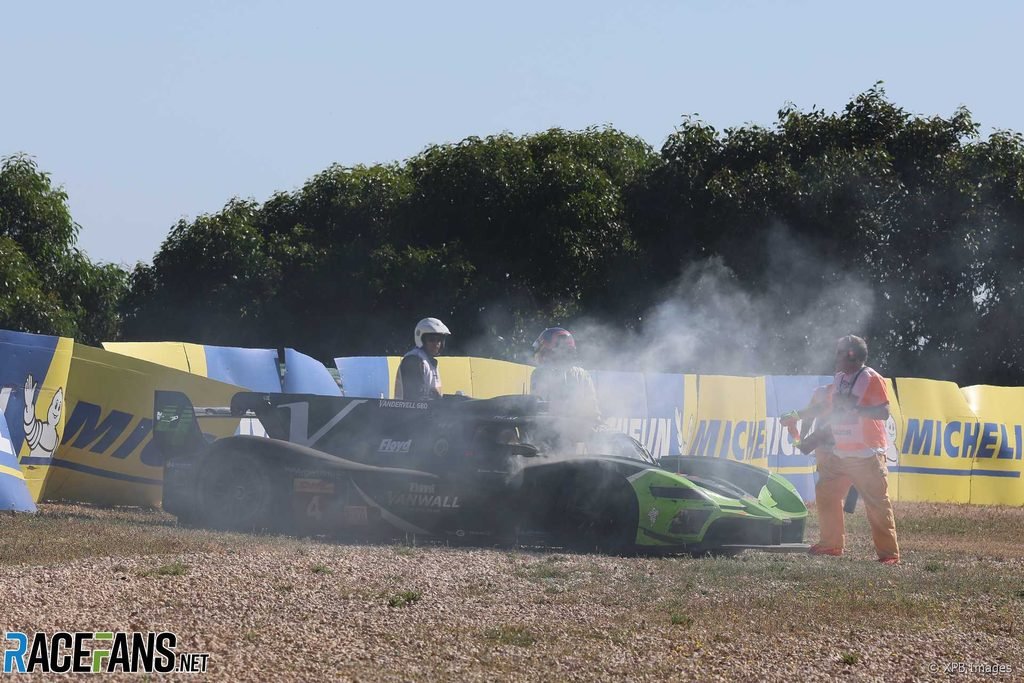
16.04.2023. FIA World Endurance Championship, Round 2, Six Hours of Portimao. Portimao, Portugal.
– www.xpbimages.com, EMail: requests@xpbimages.com © Copyright: XPB Images
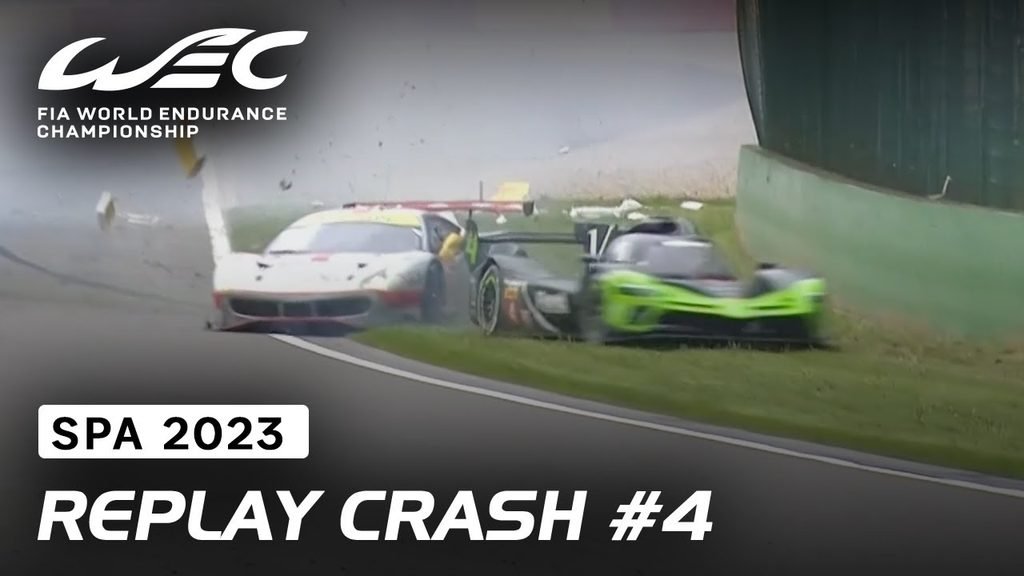
The problems didn’t stop there for the Vanwall team. After qualifying in P12 (out of 13) with a margin of almost 4 seconds against poleman Kamui Kobayashi in the 7 Toyota, the 680 LMH driven by Villeneuve crashed against the barrier after dipping 2 tyres on the grass while overtaking a Ferrari GT3 on the backstraight. The car retired on lap 80.
Finally, the 24 hours of Le Mans. Villeneuve was switched with Tristan Vautier following the birth of daughter, but in reality it was more a matter of driver performance and communication issues within the team.
Either way, the moment the whole team and brand had been waiting for. The #4 car qualified in P15 with a time of 3.29.745, only in front of the #38 Porsche who didn’t set a time. Once again unfortunately, the race didn’t end under the chequered flag but under a yellow one instead – after more than 15 hours of driving – the 4.5L V8 engine gave out before coming in the Porsche curves. This is the 3rd DNF in a row for the
team.
After 3 disastrous rounds, team ByKolles heads to Italy for the 6 hours of Monza. The green car made a clean race. Despite that, they finished in p13 after getting overtaken by the #94 Peugeot on the last lap. After 6 hours the car was 9 laps behind the leaders, which might not sound that bad after all, it starts to sound a lot worse when you think that the LMP2 leaders finished 8 laps down and effectively in front of our Hypercar. At least they finished this time I guess.
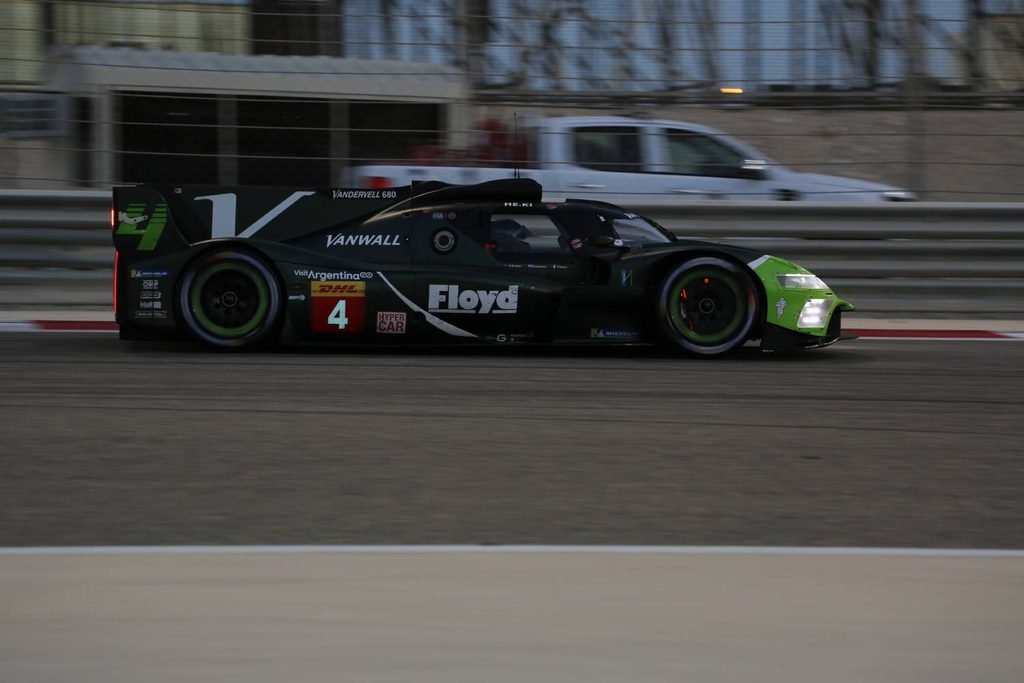
The last 2 races of the WEC 2023 Championship , Fuji and Bahrain, followed the same script, with the car suffering from a complete lack of competitiveness overall. Not even the BoP managed to keep the car afloat, the many problems in both the aerodynamics and mechanics of the car, in addition with the missing of an hybrid engine ended up resulting in an overall slow car.
THE FAILED RETURN OF THE VANWALL LMH IN 2026
Following the end of the 2023 season, the program was temporarily closed due to the disappointing result that didn’t excuse the high costs of maintenance of the car and team.
There has been rumors circulating around since the end of 2025 about the return of the Vanwall 680 on the WEC championship in 2026 with an upgraded car, that was said to have a new engine (a 3.5L V8 engine from Pipo) and extensive revisions under every aspect of the car.
But as we know, we haven’t seen any Vanwall in 2026.
There have also been talks about an ALMS (Asian Le Mans Series) debut in 2027, but as of today we know nothing that leads to an actual interest in joining the grid.
As a conclusion, it’s a shame that a name like Vanwall ended up “fighting” (there wasn’t really any fight) for the last spots on the WEC grid.
On the bright side, the new generations got to see the Vanwall name of track one more time, hopefully not the last.
See more of our articles!
https://enduvision.com/six-hours-one-winner-toyota-conquers-barcelona/
https://enduvision.com/wec-barcelona-a-successful-debut-and-whats-next/
Vanwall website;
Leave a Reply